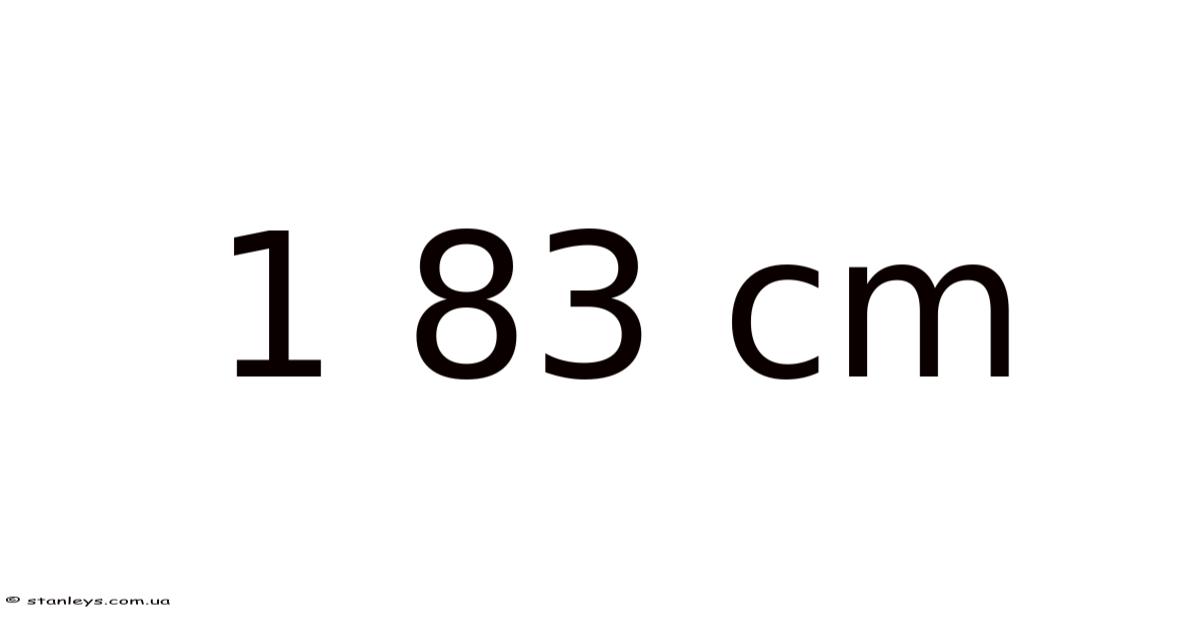
Decoding 183 cm: Height, Perspective, and the Human Experience
183 centimeters. That seemingly simple numerical expression represents a height – a measurement of a physical attribute. But within those three digits lies a much richer story, one that touches upon perceptions, societal norms, and even individual experiences. This article will delve deep into the meaning and significance of 183 cm, exploring its implications in various contexts, from the purely physical to the deeply personal.
Introduction: More Than Just a Number
The height of 183 cm, or approximately 6 feet, holds a unique position in many societies. Think about it: it's often perceived as tall, though the definition of "tall" is subjective and culturally influenced. This seemingly objective measurement becomes intertwined with social constructs, impacting self-perception, opportunities, and even interpersonal dynamics. This exploration will consider the various facets of this height, examining its impact on different aspects of life.
1. The Physical Reality of 183 cm:
Let's begin with the purely physical. 183 cm places an individual comfortably above the average height for many populations globally. This height translates to certain advantages, such as:
- Improved Reach: Reaching higher shelves, easily accessing overhead compartments, and generally having greater physical reach are benefits enjoyed by individuals of this height.
- Enhanced Visibility: In a crowd, an individual of 183 cm is more likely to be seen and heard. This can be advantageous in various settings, from public speaking to simply navigating busy streets.
- Potential for Certain Physical Activities: Some sports and professions may favor taller individuals. Basketball, volleyball, and certain modelling roles, for instance, often prioritize height. Even so, it’s crucial to understand that height is only one factor among many determining success in any field.
Still, it's equally important to acknowledge potential drawbacks:
- Physical Discomfort: Finding appropriately sized clothing, furniture, and vehicles can be challenging. Headroom limitations in cars or cramped spaces can lead to discomfort.
- Increased Energy Expenditure: Taller individuals generally have a higher metabolism and may require more energy for daily activities.
- Joint Stress: The increased weight and put to work associated with greater height can potentially increase the risk of joint pain and injuries, particularly in later life. Proper posture and regular exercise are crucial for mitigating these risks.
2. Societal Perceptions and the Psychology of Height:
Beyond the physical, height carries significant social and psychological baggage. Societal perceptions of height are deeply ingrained and often vary across cultures. In many societies, taller individuals are frequently associated with:
- Dominance and Authority: This association often stems from historical and cultural factors, where taller individuals were often perceived as physically stronger and more imposing. This perception can inadvertently influence social interactions, job opportunities, and even legal outcomes. This is not to say that taller individuals are inherently more dominant, but rather that this perception exists.
- Attractiveness: Studies have shown a correlation between perceived attractiveness and height, particularly for men. On the flip side, this is a complex issue influenced by many factors beyond mere height, including facial features, personality, and cultural context.
- Confidence and Self-Esteem: While not a direct causation, taller individuals may experience a boost in self-esteem simply due to societal preferences and the aforementioned positive associations. Conversely, individuals who feel they are outside the 'ideal' height range may struggle with body image issues.
It's crucial to debunk the myth that height dictates success or happiness. Many successful and fulfilled individuals are well outside the conventionally "ideal" height range. Focus on personal strengths, skills, and attributes, rather than being overly concerned about physical stature Nothing fancy..
3. 183 cm in Specific Contexts:
The impact of 183 cm varies drastically depending on the context Less friction, more output..
- Professional Sports: In sports like basketball, 183 cm might be considered average or even on the shorter side. In other sports, like certain martial arts, it might be an advantage or disadvantage depending on the specific discipline and fighting style.
- Modeling: The modeling industry has specific height requirements, and 183 cm falls within a desirable range for some male models. Even so, diversity in body types is thankfully increasing, making it less of a rigid requirement.
- Everyday Life: In everyday life, 183 cm offers both advantages and inconveniences, as discussed earlier. The impact is highly dependent on individual circumstances, physical fitness, and personal preferences.
4. Addressing Common Concerns:
Many individuals, regardless of their height, grapple with self-consciousness about their physical attributes. Let’s address some frequently asked questions regarding height and its impact on well-being:
-
Q: I'm 183 cm and feel too tall. What can I do? A: Focus on embracing your height. While it presents challenges, it also offers unique advantages. Try to reframe negative thoughts into positive ones. Consider connecting with others of similar height to share experiences and build confidence. Seeking support from a therapist or counselor can also be beneficial That alone is useful..
-
Q: I'm 183 cm and feel self-conscious in social situations. A: Self-consciousness is common, but it doesn't have to control your life. Focus on building your self-esteem through personal accomplishments, positive self-talk, and healthy relationships. Practice assertive communication and remember that most people are far less judgmental than you might think.
-
Q: Is there a way to increase my height after puberty? A: Unfortunately, increasing height significantly after puberty is generally not possible. While certain exercises and stretches may improve posture and potentially add a few centimeters, significant height increase is unlikely. Focus on healthy lifestyle choices that promote overall well-being, rather than chasing unattainable height goals.
5. The Broader Perspective:
When all is said and done, 183 cm is simply a measurement. It doesn't define a person's worth, potential, or happiness. Consider this: while societal perceptions exist, it’s vital to cultivate a healthy self-image that prioritizes personal growth, well-being, and fulfillment. Height is just one small aspect of a complex and multifaceted human experience. Embrace your unique attributes, celebrate your strengths, and focus on living a life rich in purpose and meaning.
This is where a lot of people lose the thread.
6. Conclusion: Embracing Your Height, Embracing Yourself
This exploration of 183 cm reveals a multifaceted reality. Consider this: while the height carries certain physical advantages and disadvantages, its significance is far more profound when considering societal perceptions and personal experiences. The key takeaway isn't to focus on changing your height, but to accept and appreciate yourself fully. Embrace it, and embrace yourself. Build confidence through self-care, personal accomplishments, and positive relationships. Also, remember, your worth extends far beyond a simple numerical measurement. Height is but one aspect of your unique and valuable identity. Your journey towards self-acceptance and fulfillment is far more important than any number on a measuring tape Most people skip this — try not to. Nothing fancy..
Not obvious, but once you see it — you'll see it everywhere The details matter here..
7. Scientific Considerations:
From a purely scientific standpoint, 183 cm represents a data point within the range of human height variation. So genetic factors, nutrition, and environmental influences play crucial roles in determining an individual's height. While average heights vary across different populations and geographical locations, 183 cm generally falls within the taller range. So understanding the physiological mechanisms that regulate growth, bone development, and hormonal influences helps contextualize the physical aspect of this height. That said, it’s critical to underline that scientific understanding should not overshadow the crucial role of individual experiences and societal perceptions in shaping the meaning of this measurement Not complicated — just consistent..
This exploration of 183 cm goes beyond a simple measurement. Practically speaking, it’s a journey into the complex interplay of physical attributes, societal perceptions, and individual experiences. The objective is not to prescribe a specific approach to dealing with this height, but rather to empower individuals to embrace themselves fully, regardless of societal expectations.
